NORTH AMERICAN RIVER OTTER NATURAL HISTORY And CONSERVATION

NORTH AMERICAN RIVER OTTER NATURAL HISTORY And CONSERVATION

North American River Otter

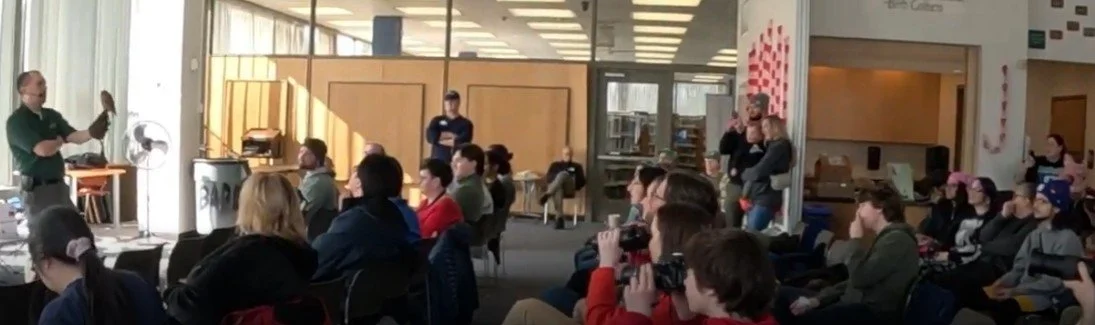
Learn about the largest member of the weasel family found in our region, the North American River Otter. Uncover their basic natural history, their decline and conservation success story, and more, with cameos from the Da Vinci Science Center’s otters. 

Brandon Swayser, Director of Environmental Science and Living Collections at the Da Vinci Science Center presented this program. 

A great program for the kids!

For those that missed this LVAS program on September 25, 2025 or those who wish to see it again, following is the link to the program recording: https://www.youtube.com/watch?v=w1mL0-juYHg

7 Communities Reached with Birding Backpacks

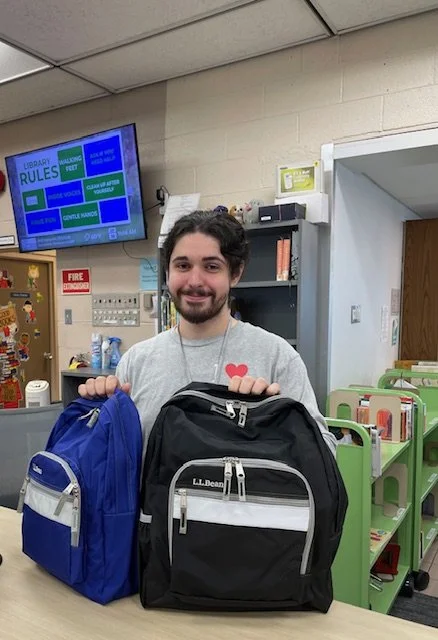
The Emmaus Public Library is the newest home to birding backpacks donated by LVAS!

LVAS Birding Backpacks Donated  to Emmaus Public Library 2025

Each kit contains a pair of Kowa binoculars, a field guide and common bird ID sheet, instructions on how to use binoculars in English and Spanish, and a guide to local parks.

We previously supplied kits to Allentown, Bethlehem, and Easton. This summer we expanded our program to Nazareth, Palmerton, and Parkland, and now we’ve included Emmaus.

Be sure to let your friends, neighbors, teachers, and others in these municipalities know that they or their children can check out a kit and give birding a try!

LVAS: September 5th Field Trip to View Chimney Swifts & Follow-up Report

Chimney Swifts photo credit:  Peter Saenger

Chimney Swifts photo credit: Peter Saenger

By late summer, Chimney Swifts have left their nest sites and are gathering in large numbers in preparation for migration to South America. The sight of Chimney Swifts gathering at dusk and funneling into communal roosts in chimneys can be impressive. The past week or two has seen good numbers of Swifts at the chimney at Raub Middle School in Allentown.

When: 7:15 p.m. on Friday, September 5. We will be done by 8:15

Where: We will watch from the top of the St. Luke's Hospital parking deck that is directly opposite the school.

Park along the street at Raub Middle School, 102 St. Cloud St., Allentown.  (Please do not use the hospital parking deck unless you are unable to walk or ride the elevator to the top of the deck. ) 

Come up to the top, open floor and look for us across from the school chimney.

This is an accessible field trip for anyone with mobility limitations, since you can drive up to the viewing spot if necessary. Bring a folding chair if you will need to sit down.

Note: Swift numbers can vary a lot as they move through. A large group can be there one day and gone the next. No guarantees!

Chimney Swift viewing trip Report:

DATE: September 5, 2025
Leader: Barbara Malt
Participants: 23

We met to view the Chimney Swifts gathering to roost at the Raub Middle School in Allentown. We were treated to large numbers of swifts congregating and swirling over the chimney. Eventually the swirling cloud of birds became tighter and individuals began to drop into the chimney.

We estimated at least 2,000 Swifts.

Call for "early bird" volunteers!

Do you live or work in Allentown and Have a few extra minutes in the morning?

Care about saving birds from glass collisions?

If so, Lehigh Valley Audubon Society (LVAS) has the perfect short-term volunteer opportunity for you

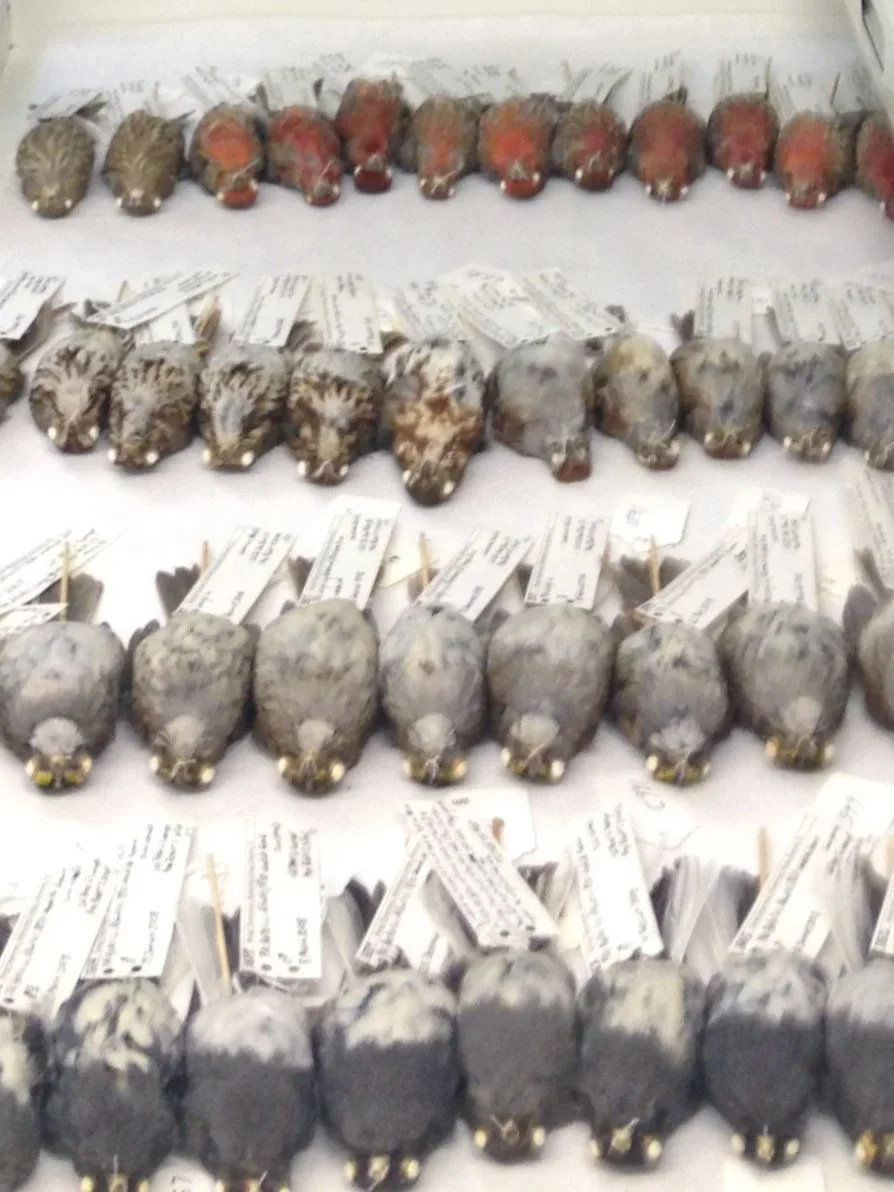
First, a little background: In the U.S. alone, a mind-boggling billion birds a year are estimated to die from flying into glass. (Did you know that LVAS' own Peter Saenger is one of the researchers who came up with that sobering statistic?) Birds are unable to see glass, and many of the features that make buildings attractive to us -- for example, glass facades, plant-filled atria, or beautiful natural landscaping reflected in glass windows or walls -- make buildings especially dangerous for birds.

Bird Victims of Window Collisions

Bird Victims of Window Collisions

Downtown Allentown already has a number of predominantly glass buildings, and several new glass-facade buildings are planned. To help LVAS better help the birds, we'd like to understand more about the toll the existing glass buildings may be taking on birds, especially during migration.

That's where you (might) come in. We're looking for a few volunteers to conduct a survey starting the last week in August or first week in September and running through mid-October. It would involve spending a few minutes on some early mornings (pre-8 a.m.) checking around several predominantly glass buildings in the downtown for evidence of bird strikes, including dead birds. LVAS would coordinate the effort, provide whatever support may be needed, and let you know what to do if you find an injured bird.    

Please contact us by posting a comment or through our website at: https://www.lvaudubon.org/contact , if you're able to help or would like more information.

Thanks in advance for standing up (or getting up early) for the birds! 

Read more on our website about Bird-Window Collisions.

Conserving Purple Martins and Studying Natal Dispersal

The Lehigh Valley Audubon Society, The Acopian Center for Ornithology at Muhlenberg College, and Northampton County Parks and Recreation have worked hard to bring Purple Martins back to the Lehigh Valley over the past few years in places like Lake Minsi. With these colonies now boasting large numbers of breeding martins, the question arises: where will the newly hatched Purple Martin chicks nest? Some will return to the colony where they were born, if there are empty nesting gourds. Many of these birds, once they return to the Lehigh Valley for their first breeding season, will have to find somewhere else to nest. Where will these martins go?

Photo of Purple Martin Tower Information Sign

This phenomenon is called natal dispersal. It is the permanent relocation of a Purple Martin during the breeding season, and it is an important part of how the birds find new nesting colonies. Natal dispersal remains a mystery for martin enthusiasts and researchers alike, and we’re trying to answer this question.

In conjunction with the University of Delaware and the Purple Martin Conservation Association, we are studying how far and frequently Purple Martins disperse from their breeding site. This information will be critical in the establishment of new colonies.

Purple Martin chicks are being color banded in the Lehigh Valley to track this natal dispersal. Each martin chick gets a color band that ties it to the colony where it hatched. Then, we can “resight” this bird in the field the next year, and see how far the bird has dispersed, based on where that bird is re-found. More banding from our collaborators is starting in southeastern and northwestern Pennsylvania. All of the martins across the state are color banded with a unique combination of colors, so we’ll know exactly where each banded bird we find originated.

Because Purple Martins can disperse so widely, we need your help looking for dispersed birds! Whether you have Purple Martins nesting on your property or in a local park, you can participate in this research project by looking for small, colored bands on the legs of Purple Martins. If you see a color banded bird at your colony, please let us know! First, record what color band or bands you see, the relative position of each band, and which leg the bands were on. If you have a camera, take some pictures! The easiest way to submit your sightings is with this web form: https://bit.ly/PA_Martin_Study. If you have pictures of a color banded bird at your colony, you can send them to Will Krohn, the graduate student at the University of Delaware helping conduct this research, at wkrohn@udel.edu. If you can’t complete the online form, you can also call Will at 484-702-1276.

Read more about recent LVAS Purple Martin towers.

Support our conservation efforts in the Lehigh Valley by becoming a member of our chapter, volunteering with us &/or donating.
LVAS Birding Packpack Program Continues

Carla Derck

Originally Published in January - March 2025 Quarterly Newsletter of The Lehigh Valley Audubon Society

The success of the LVAS birding backpack program continued this past fall with four kids’ backpacks presented to the Bethlehem Public Library on December 9, 2024. A collaborative grant from the National Audubon Society helped fund the expanding program.

At the suggestion of the library, a new item was added this time – a journal in which borrowers can record what, where and when they see birds. The journal remains with the backpack for future borrowers to reference and add their own sightings. The program has been so well-received that we may be expanding it to more area libraries in the future.

Photo of LVAS Board Member, Carla Derck, delivering Birding Backpacks to Bethlehem Public Library

Photo of LVAS Board Member, Carla Derck, delivering Birding Backpacks to Bethlehem Public Library

Engage with Lehigh Valley Audubon Society to be notified of future educational programs, guided walks, volunteer opportunities, and all of our latest activities.

If you’re not already a member of our Community Chapter of Audubon, please join, volunteer &/or donate to help with our ongoing Lehigh Valley educational and preservation efforts.

Read about more of our past activities in our newsletter archives.