Education

Lehigh Valley Christmas Bird Count 2025

Brandon Swayser

This year will mark the 126th annual Audubon Christmas Bird Count (CBC), the world’s longest-running citizen science project and wildlife census.

The Lehigh Valley Christmas Bird Count will take place on Saturday, December 20, 2025. This will be the 82nd year of our count.

The Lehigh Valley Audubon Society (LVAS) administers the annual Lehigh Valley Christmas Bird Count, and several other counts occur nearby, any of which could use your help!

We are looking for 2 types of volunteer participants in our designated circle, feeder-watchers and extra counters.

Feeder-watchers who live within this circle are needed to accurately identify all species commonly seen in their yard.  They count birds for any length of time on the 20th and report your sightings on a datasheet that we will provide.

Extra counters will be placed on one of our 12 area leaders' teams, within our designated circle, to drive/walk most of the day to count birds.

We hope you can join us!

If you have any questions, please feel free to contact LVAS’s count complier Brandon Swayser at brandon.swayser@davincisciencecenter.org

What is the Christmas Bird Count?

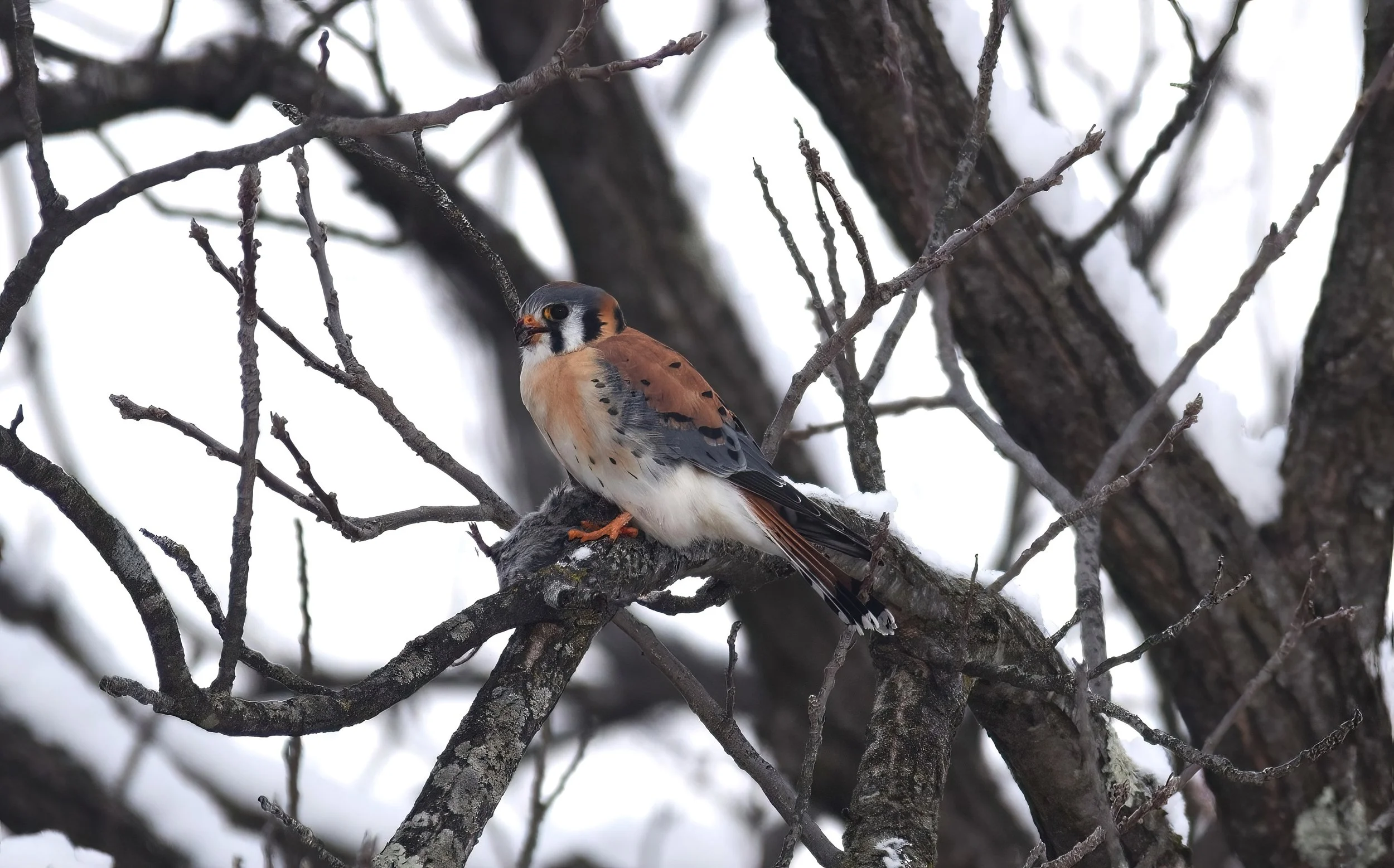
American Kestrel photographed during the 2024 Lehigh Valley CBC

American Kestrel photographed during the 2024 Lehigh Valley CBC

For those of you who are unfamiliar, the CBC is an annual volunteer-run census of birds that takes place across the western hemisphere from December 14th through January 5th every year. It is made up of thousands of local counts, each lasting 24 hours, covering a 15-mile wide diameter circle of land, and organized by a count compiler. Teams of volunteer counters typically split up areas of the circle and drive and/or walk those areas for up to 24 hours straight, recording the birds that they observe. Christmas Bird Counts are rich in tradition and camaraderie, and due to their thorough nature, often turn up some pretty incredible birds! For many birders, the CBC is one of the highlights of their year, a chance to catch up with old friends, see some rare birds, and above all else, contribute meaningful data to one of the worlds’ most powerful conservation science studies.  

That sounds great and all, but isn’t really my cup of tea, how else can I help?

It’s understandable that spending 12+ hours straight birding in the cold isn’t for everyone, but there is another way in which most people can participate, and that is by being a feeder-watcher. Feeder-watchers spend a portion of their area’s count day observing their backyard birdfeeders, or any birds in their yard or local greenspace, and report their sightings to their area’s compiler.


Here are a few easy steps for getting involved as a feeder-watcher: 

  1. Determine which (if any) circle your backyard is in by going to:  https://www.audubon.org/community-science/christmas-bird-count/join-christmas-bird-count. Click the bold link on that page that says “click here for a map view of circles expected…” and zoom in to your home area on the map. If you are in a circle on that map, click the yellow bird icon in that circle and you will see the count date, and compiler’s contact info. This map may not be updated until November.

  2. Contact the compiler to see if you can sign up to be a feeder-watcher for that count. Don’t wait until the last minute. 

  3. On the day of the count, keep a checklist of all bird species you see at your feeders, recording only the highest number of each species that you saw at one time - birds will often visit feeders many times over the course of the day, so this part is important. You also must record your effort - the amount of time that you spent counting birds in your yard and the number of observers who counted with you.

  4. Finally, follow your compiler’s instructions (usually a simple email) for reporting your observations. 

Why is the CBC important?

By conducting a standardized survey of birds on the same date, in the same location, with the same methods, and usually by the same people year after year, we gain incredibly valuable data on long term changes in bird populations. CBC data has been the first alert to many population trends over the years and has made an immense impact on avian conservation science. Count data has pointed out downward population trends like that of Evening Grosbeaks and Common Grackle and has helped to inform scientists and catalyze the next steps of conservation work to help these species. Additionally, the CBC is a great way to get new birders involved and grow our team of citizen scientists, and hey, it’s fun!
Former LVAS President, Dale Steventon, Shares History & Video of Bart Snyder's Egg Collection

Preview Video Clip of Bart Snyder's Egg Collection, courtesy of Dale and Alison Steventon

In mid-October, 2025, LVAS President, Barbara Malt, received an email from Dale Steventon saying “I am 90 years old. I was president of the Lehigh Valley Audubon Society in 1977 to 1980. I would like to share several things with you...” Barbara and LVAS History Committee Chair, Betty Abrams, met with Dale and his wife, Alison, in their home in Schnecksville on November 10th.

During their visit, Dale kindly shared an hour-long video that he and Alison recorded in 1993 while visiting Bart Snyder’s museum of wildlife specimens. Snyder (1906-1998) was a member of LVAS and an amateur ornithologist and oologist – a person who studies or collects bird eggs. His personal museum, the largest private collection of its kind in North America, included mounted birds and more than 16,000 eggs representing more than 500 different species. Most specimens included valuable scientific data, including when, where, and by whom they were collected.

A 1987 Morning Call article offers some background on Snyder and his unique collection: “Snyder began his unusual hobby at age 14 when his cousin gave him a set of eggs. Later he became acquainted with oologists all over the country and traded specimens, thereby enhancing his collection. Only about 20 percent of the inventory was collected by Snyder himself. He’s long maintained state and federal licenses necessary for collecting and keeping the specimens, which have been emptied of their contents and rest on beds of foam mulch in cabinets in Snyder’s basement. Although legal at one time, for many years it’s been against the law to take eggs from nests – a point that Snyder underscores each time he speaks to students.”

The contents of Snyder’s collection have since been donated to various research institutions and organizations, including Muhlenberg College. This is a preview of the full video, which offers a rare glimpse of Snyder’s full collection while it was still on display in his West Allentown home.

LVAS thanks Dale and Alison for documenting Snyder’s collection and sharing this video. To view the full-length video, check out Lehigh Valley Audubon Society’s YouTube channel or visit this link: https://www.youtube.com/watch?v=KCtMlOxdqYE

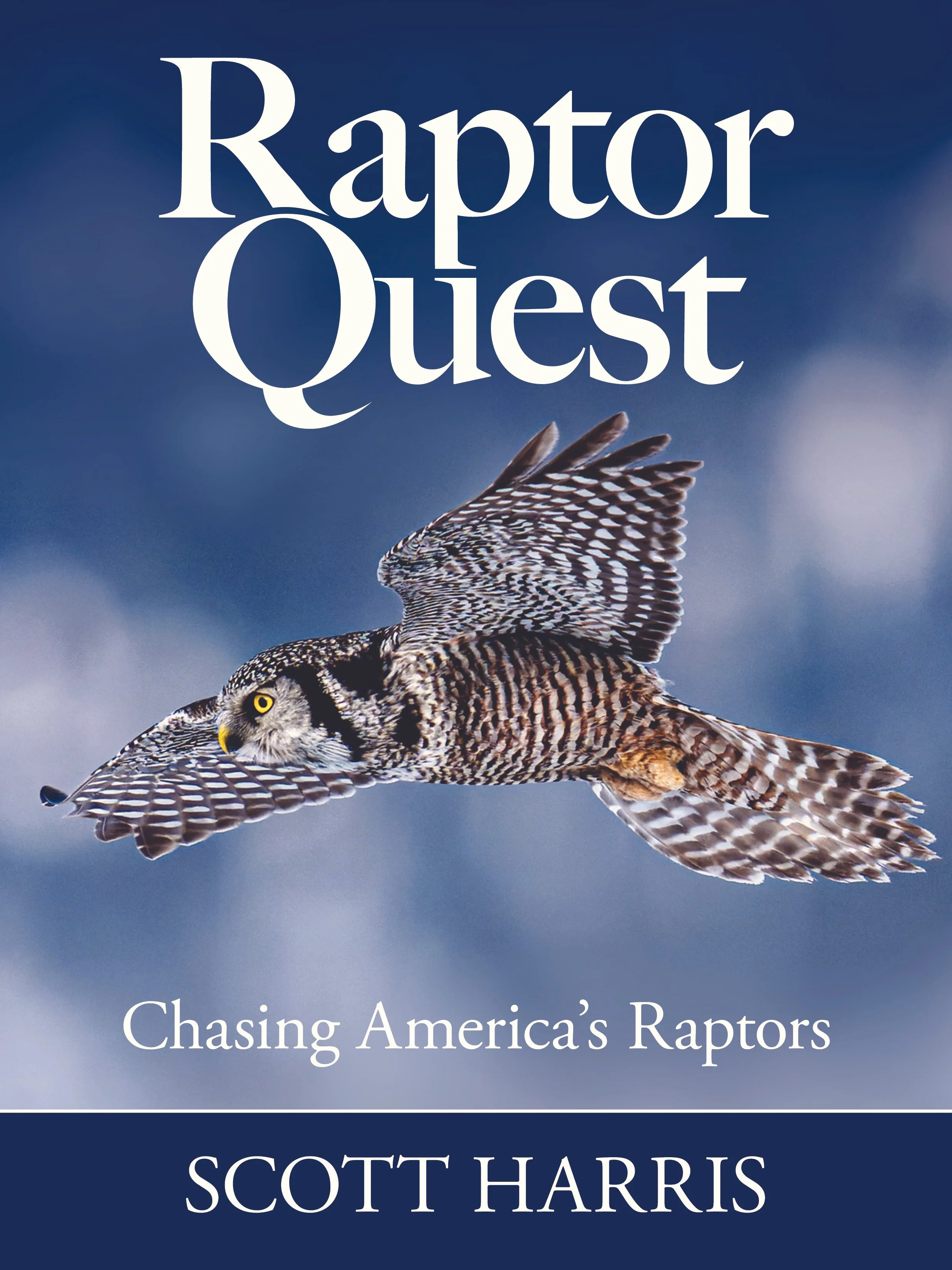
RAPTOR  QUEST. CHASING AMERICA’S RAPTORS

LVAS HOSTED THIS Zoom PRESENTATION on October 10, 2025 at 7 pm Eastern Time (US and Canada) 

Raptor Quest book cover

Scott Harris, Wildlife Photographer and Author of “Raptor Quest” takes us on his journey to find all 53 of the Raptors that call the lower 48 states home. He’ll share his adventures, misadventures, successes and failures during his 17 months of traveling more than 100,000 miles across 34 states. In Scotts words, “It’s about the raptors of course, but it’s also about the people I’ve met and the things I’ve learned.”


If you missed the presentation, you can access the recording here: https://www.youtube.com/watch?v=40vlZ_767j8

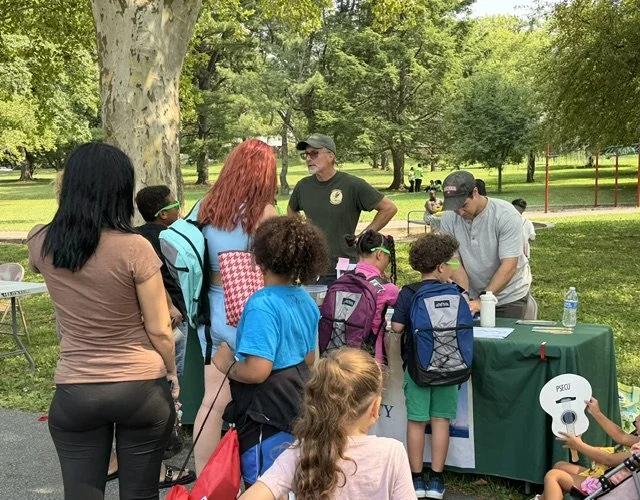
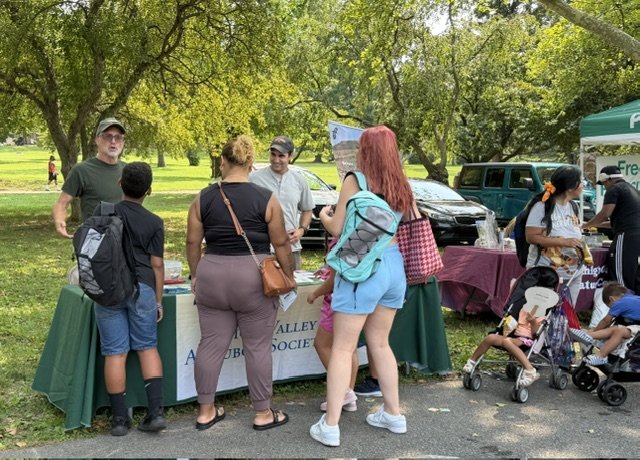
LVAS at the Upper Perkiomen Bird and Wildlife Festival

We had 253 visitors to our table!

Thank you to our volunteers Dan Pokras, Diane Rudolph, and Chris Sipos for covering the table!

LVAS also had a table at the Pennsylvania Society for Ornithology meeting at the same time.

Thank you to Matt Docalovich from the Alaska Wilderness League for helping cover that table and talking to people about the Arctic defense campaign. A good reminder to everyone that many of our birds depend on Arctic breeding grounds and we must speak out to preserve their habitats under threat from Federal legislation. (Photo by Leigh Altadonna.)

LVAS at Upper Perkiomen Bird and Wildlife Festival

LVAS at Upper Perkiomen Bird and Wildlife Festival

7 Communities Reached with Birding Backpacks

The Emmaus Public Library is the newest home to birding backpacks donated by LVAS!

LVAS Birding Backpacks Donated  to Emmaus Public Library 2025

Each kit contains a pair of Kowa binoculars, a field guide and common bird ID sheet, instructions on how to use binoculars in English and Spanish, and a guide to local parks.

We previously supplied kits to Allentown, Bethlehem, and Easton. This summer we expanded our program to Nazareth, Palmerton, and Parkland, and now we’ve included Emmaus.

Be sure to let your friends, neighbors, teachers, and others in these municipalities know that they or their children can check out a kit and give birding a try!

LVAS Birding Packpack Program Continues

Carla Derck

Originally Published in January - March 2025 Quarterly Newsletter of The Lehigh Valley Audubon Society

The success of the LVAS birding backpack program continued this past fall with four kids’ backpacks presented to the Bethlehem Public Library on December 9, 2024. A collaborative grant from the National Audubon Society helped fund the expanding program.

At the suggestion of the library, a new item was added this time – a journal in which borrowers can record what, where and when they see birds. The journal remains with the backpack for future borrowers to reference and add their own sightings. The program has been so well-received that we may be expanding it to more area libraries in the future.

Photo of LVAS Board Member, Carla Derck, delivering Birding Backpacks to Bethlehem Public Library

Photo of LVAS Board Member, Carla Derck, delivering Birding Backpacks to Bethlehem Public Library

Engage with Lehigh Valley Audubon Society to be notified of future educational programs, guided walks, volunteer opportunities, and all of our latest activities.

If you’re not already a member of our Community Chapter of Audubon, please join, volunteer &/or donate to help with our ongoing Lehigh Valley educational and preservation efforts.

Read about more of our past activities in our newsletter archives.