Story

Former LVAS President, Dale Steventon, Shares History & Video of Bart Snyder's Egg Collection

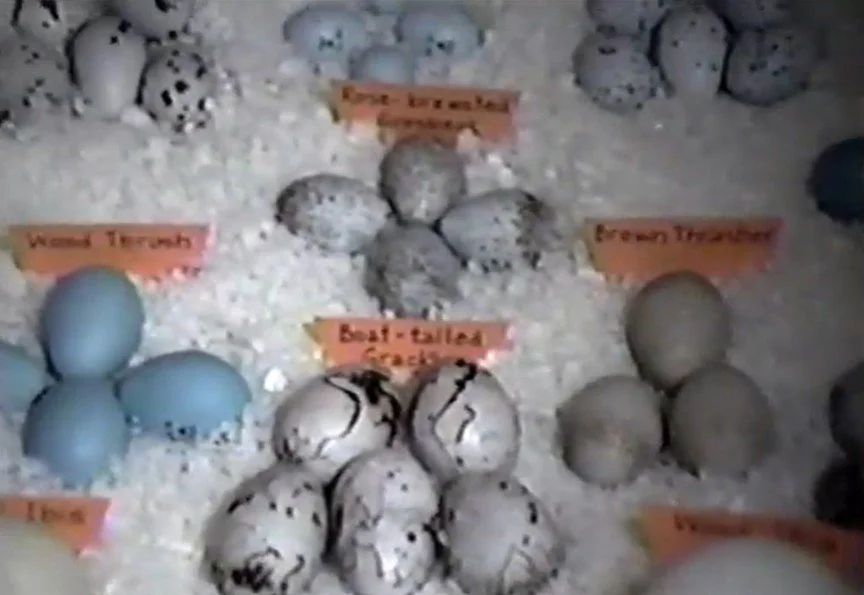
Preview Video Clip of Bart Snyder's Egg Collection, courtesy of Dale and Alison Steventon

In mid-October, 2025, LVAS President, Barbara Malt, received an email from Dale Steventon saying “I am 90 years old. I was president of the Lehigh Valley Audubon Society in 1977 to 1980. I would like to share several things with you...” Barbara and LVAS History Committee Chair, Betty Abrams, met with Dale and his wife, Alison, in their home in Schnecksville on November 10th.

During their visit, Dale kindly shared an hour-long video that he and Alison recorded in 1993 while visiting Bart Snyder’s museum of wildlife specimens. Snyder (1906-1998) was a member of LVAS and an amateur ornithologist and oologist – a person who studies or collects bird eggs. His personal museum, the largest private collection of its kind in North America, included mounted birds and more than 16,000 eggs representing more than 500 different species. Most specimens included valuable scientific data, including when, where, and by whom they were collected.

A 1987 Morning Call article offers some background on Snyder and his unique collection: “Snyder began his unusual hobby at age 14 when his cousin gave him a set of eggs. Later he became acquainted with oologists all over the country and traded specimens, thereby enhancing his collection. Only about 20 percent of the inventory was collected by Snyder himself. He’s long maintained state and federal licenses necessary for collecting and keeping the specimens, which have been emptied of their contents and rest on beds of foam mulch in cabinets in Snyder’s basement. Although legal at one time, for many years it’s been against the law to take eggs from nests – a point that Snyder underscores each time he speaks to students.”

The contents of Snyder’s collection have since been donated to various research institutions and organizations, including Muhlenberg College. This is a preview of the full video, which offers a rare glimpse of Snyder’s full collection while it was still on display in his West Allentown home.

LVAS thanks Dale and Alison for documenting Snyder’s collection and sharing this video. To view the full-length video, check out Lehigh Valley Audubon Society’s YouTube channel or visit this link: https://www.youtube.com/watch?v=KCtMlOxdqYE

7 Communities Reached with Birding Backpacks

The Emmaus Public Library is the newest home to birding backpacks donated by LVAS!

LVAS Birding Backpacks Donated  to Emmaus Public Library 2025

Each kit contains a pair of Kowa binoculars, a field guide and common bird ID sheet, instructions on how to use binoculars in English and Spanish, and a guide to local parks.

We previously supplied kits to Allentown, Bethlehem, and Easton. This summer we expanded our program to Nazareth, Palmerton, and Parkland, and now we’ve included Emmaus.

Be sure to let your friends, neighbors, teachers, and others in these municipalities know that they or their children can check out a kit and give birding a try!

Conserving Purple Martins and Studying Natal Dispersal

The Lehigh Valley Audubon Society, The Acopian Center for Ornithology at Muhlenberg College, and Northampton County Parks and Recreation have worked hard to bring Purple Martins back to the Lehigh Valley over the past few years in places like Lake Minsi. With these colonies now boasting large numbers of breeding martins, the question arises: where will the newly hatched Purple Martin chicks nest? Some will return to the colony where they were born, if there are empty nesting gourds. Many of these birds, once they return to the Lehigh Valley for their first breeding season, will have to find somewhere else to nest. Where will these martins go?

Photo of Purple Martin Tower Information Sign

This phenomenon is called natal dispersal. It is the permanent relocation of a Purple Martin during the breeding season, and it is an important part of how the birds find new nesting colonies. Natal dispersal remains a mystery for martin enthusiasts and researchers alike, and we’re trying to answer this question.

In conjunction with the University of Delaware and the Purple Martin Conservation Association, we are studying how far and frequently Purple Martins disperse from their breeding site. This information will be critical in the establishment of new colonies.

Purple Martin chicks are being color banded in the Lehigh Valley to track this natal dispersal. Each martin chick gets a color band that ties it to the colony where it hatched. Then, we can “resight” this bird in the field the next year, and see how far the bird has dispersed, based on where that bird is re-found. More banding from our collaborators is starting in southeastern and northwestern Pennsylvania. All of the martins across the state are color banded with a unique combination of colors, so we’ll know exactly where each banded bird we find originated.

Because Purple Martins can disperse so widely, we need your help looking for dispersed birds! Whether you have Purple Martins nesting on your property or in a local park, you can participate in this research project by looking for small, colored bands on the legs of Purple Martins. If you see a color banded bird at your colony, please let us know! First, record what color band or bands you see, the relative position of each band, and which leg the bands were on. If you have a camera, take some pictures! The easiest way to submit your sightings is with this web form: https://bit.ly/PA_Martin_Study. If you have pictures of a color banded bird at your colony, you can send them to Will Krohn, the graduate student at the University of Delaware helping conduct this research, at wkrohn@udel.edu. If you can’t complete the online form, you can also call Will at 484-702-1276.

Read more about recent LVAS Purple Martin towers.

Support our conservation efforts in the Lehigh Valley by becoming a member of our chapter, volunteering with us &/or donating.

LVAS Birding Packpack Program Continues

Carla Derck

Originally Published in January - March 2025 Quarterly Newsletter of The Lehigh Valley Audubon Society

The success of the LVAS birding backpack program continued this past fall with four kids’ backpacks presented to the Bethlehem Public Library on December 9, 2024. A collaborative grant from the National Audubon Society helped fund the expanding program.

At the suggestion of the library, a new item was added this time – a journal in which borrowers can record what, where and when they see birds. The journal remains with the backpack for future borrowers to reference and add their own sightings. The program has been so well-received that we may be expanding it to more area libraries in the future.

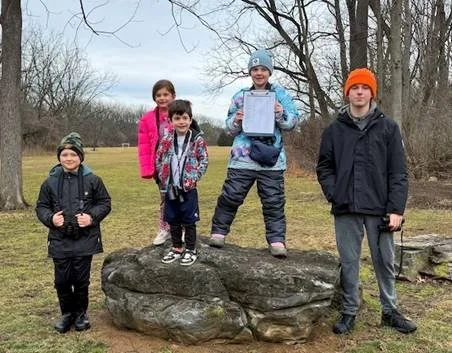
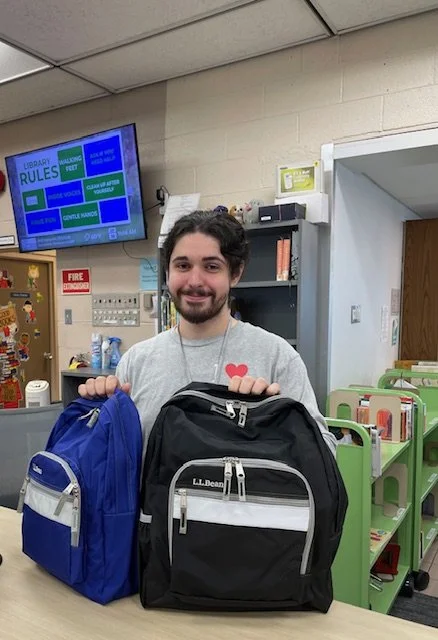
Photo of LVAS Board Member, Carla Derck, delivering Birding Backpacks to Bethlehem Public Library

Photo of LVAS Board Member, Carla Derck, delivering Birding Backpacks to Bethlehem Public Library

Engage with Lehigh Valley Audubon Society to be notified of future educational programs, guided walks, volunteer opportunities, and all of our latest activities.

If you’re not already a member of our Community Chapter of Audubon, please join, volunteer &/or donate to help with our ongoing Lehigh Valley educational and preservation efforts.

Read about more of our past activities in our newsletter archives.

Bluebird Nest Box Tips from LVAS Habitat Committee!

Spring thaw is right around the corner!!

Eastern Bluebird perched outside entrance of nest box

Eastern Bluebird at entrance to nest box - photo provided by Lehigh Gap Nature Center

Provide Clean Nest Boxes for Bluebirds

Now is a great opportunity to finish up some winter projects and get ready for nicer weather and some great birding.

If you are thinking about adding a bluebird box to your property, now is a great time to get it installed. Birds are slowly moving around and starting to inspect locations for nests this season.

If you have nest boxes up already, now is the time to get them cleaned out and ready for the next generation of bluebirds! No need to add material, simply remove any old nesting material or caches that rodents may have left for winter.

Keep an eye out for more bird/habitat tips!

If you’re not a member of our Community Chapter of Audubon, please join and/or volunteer to help with our ongoing Lehigh Valley habitat preservation efforts.

You can read summaries of some of our efforts to Preserve habitat in the Lehigh Valley, like our multi-species Nest Box Trail System, or read related, more detailed stories by clicking a tag or category to filter this page.

Additional Bluebird Nest Box Construction and Maintenance Information:

https://nestwatch.org/learn/all-about-birdhouses/birds/eastern-bluebird/

https://www.audubon.org/news/how-build-bluebird-nest-box

Engage with LVAS, Help Maintain and Monitor Purple Martin Condos

We’ll need more help this year with installation labor, monitoring, maintenance, winter storage, and, of course, all the banding and data collection done each nesting season.

There were NO Purple Martins nesting at Minsi Lake before 2020. Thanks to Lehigh Valley Audubon Society (LVAS) volunteers, a large and growing Purple Martin colony can now be seen at Minsi Lake.

In 2024, the Northampton County Parks and Recreation and LVAS partnership managed 108 condos in six nesting towers—five at Minsi Lake Park and one at Louise Moore Park. Occupancy during nesting season in the Minsi Lake condos was over 90% with nesting pairs in 80 of the 90 condo units, including 36 new units.

Interested in volunteering? Email James Wilson, Recreation & Conservation Specialist for Northampton County Parks, at jwilson@norcop.gov to help with this Purple Martin project.

Complete the LVAS Volunteering Form to let us know what other volunteer opportunities might interest you.

Read more about Purple Martins at Minsi Lake.